
Blog
Read what's happening in FirstouchKiosk | Keep update yourself about best digital signage solution & technology. Learn how digital signage / digital kiosk / digital notice board and digital standees can help in your business growth.
Read what's happening in FirstouchKiosk | Keep update yourself about best digital signage solution & technology. Learn how digital signage / digital kiosk / digital notice board and digital standees can help in your business growth.
 Video Wall |
  6th Aug 2026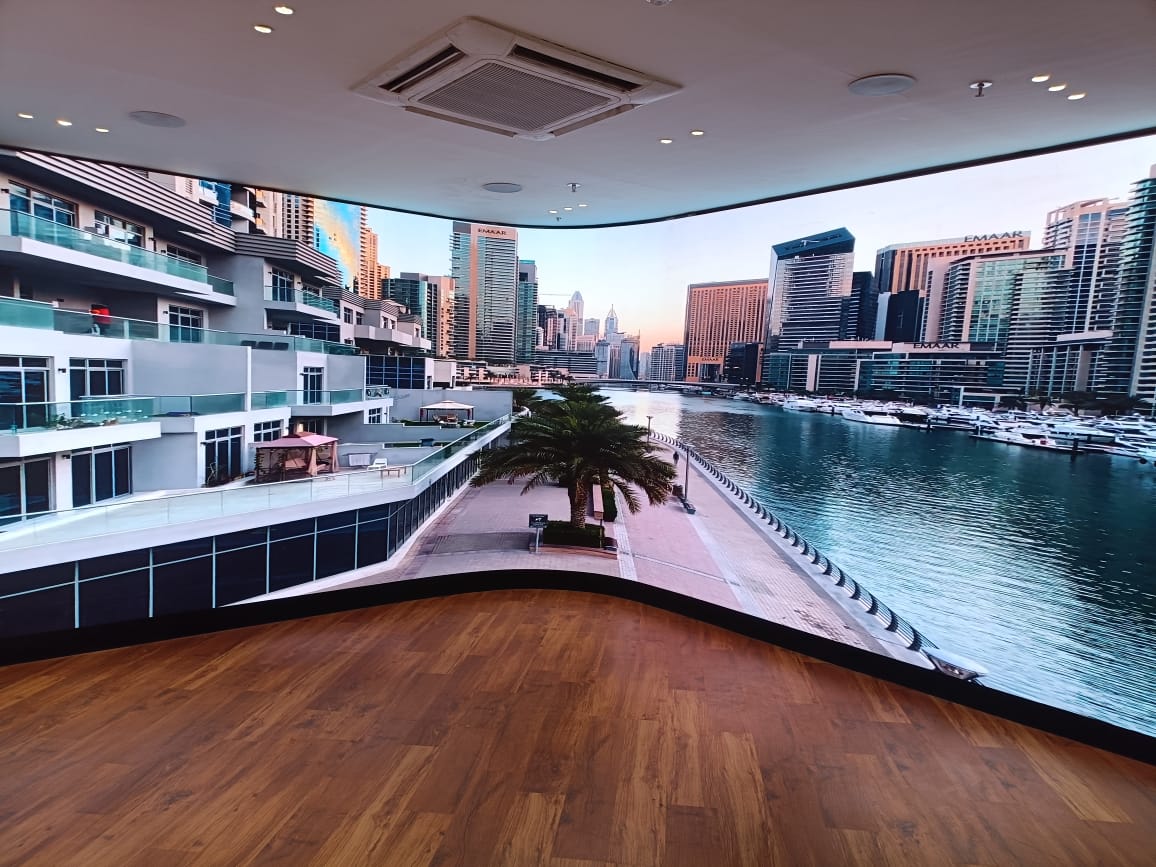
Businesses today demand display technology that delivers exceptional image quality, uninterrupted performance, and long-term reliability. Whether it is a corporate headquarters, premium retail showroom, airport, control room, or hospitality environment, traditional display technologies often struggle to meet modern expectations for seamless visuals and continuous operation.
An Active LED Video Wall addresses these challenges by combining individually controlled LED technology with modular cabinet architecture, creating a display solution capable of delivering vibrant colors, high brightness, ultra-smooth motion, and virtually limitless scalability. Unlike conventional LCD video walls, Active LED displays eliminate visible bezels while providing greater flexibility for custom sizes and aspect ratios.
As organizations increasingly invest in digital experiences, understanding how Active LED technology works—and what truly differentiates one solution from another—has become essential for making informed purchasing decisions.
This comprehensive guide explains everything buyers need to know, from core technology and technical specifications to installation considerations, cost factors, and practical buying advice.
Active LED Video Walls have become the preferred display technology for organizations seeking larger, brighter, and more immersive visual experiences without the limitations of traditional LCD panels.
Over the last decade, commercial display requirements have evolved dramatically. Businesses no longer require displays that simply show content—they need platforms that engage customers, communicate information effectively, and operate reliably around the clock.
Traditional LCD video walls have served businesses well for years. However, they come with inherent limitations:
Active LED Video Walls overcome these limitations through modular LED cabinets that connect seamlessly, creating one continuous display regardless of size.
This shift is particularly evident across industries where visual impact directly influences customer engagement and operational efficiency.
Examples include:
For many organizations, an Active LED Video Wall is no longer viewed as a luxury—it has become a strategic communication asset.
An Active LED Video Wall is a modular display system that uses active-matrix technology to independently control every LED pixel through dedicated electronic driver circuits. This architecture enables superior brightness, higher refresh rates, better color accuracy, improved reliability, and seamless large-format visuals for professional commercial applications.
Unlike traditional display technologies that rely on backlit LCD panels or passive scanning methods, Active LED displays generate light directly from millions of tiny light-emitting diodes.
Each LED receives precise electrical control through integrated driver ICs (Integrated Circuits), allowing the display to reproduce images with exceptional accuracy and stability.
The modular cabinet design means multiple LED panels can be assembled into virtually any size without visible borders between sections.
This creates a truly seamless viewing experience that is impossible to achieve using conventional LCD video walls.
At its core, every Active LED Video Wall consists of thousands—or even millions—of microscopic LEDs arranged in an organized matrix.
Each pixel contains:
By varying the intensity of these three LEDs, the system can generate millions of colors.
Unlike passive LED technology, Active LED systems assign dedicated electronic control to every pixel.
This architecture provides several important advantages:
Each pixel responds instantly to incoming video signals.
This results in:
Commercial Active LED displays commonly support refresh rates of:
Higher refresh rates eliminate:
This is particularly important for television studios, conference halls, esports arenas, and live production environments.
Modern LED controllers continuously optimize:
These adjustments ensure that every cabinet displays identical colors across the entire video wall.
Unlike LCD displays with fixed dimensions, Active LED Video Walls use modular cabinets.
Organizations can create displays that are:
This flexibility makes Active LED technology one of the most versatile commercial display solutions available today.
The superior performance of an Active LED Video Wall comes from its advanced electronic architecture rather than simply having more LEDs. Driver IC quality, scan technology, calibration accuracy, and controller performance all play a critical role in delivering premium image quality.
Many buyers assume that every LED display performs similarly if the pixel pitch is the same.
In reality, two displays with identical pixel pitches can deliver dramatically different results because of differences in their internal engineering.
Understanding these core components helps buyers evaluate quality beyond marketing specifications.
The term “Active LED” refers to the method used to control individual LEDs.
Instead of relying on shared electrical pathways, every pixel receives dedicated electronic control through active driver circuits.
This enables:
The result is a display capable of maintaining exceptional visual quality even during high-speed video playback.
Driver ICs act as the “brain” of each LED module.
They regulate:
Premium driver ICs contribute significantly to:
Although often overlooked, driver IC quality is one of the strongest indicators of a commercial-grade LED display.
An Active LED Video Wall consists of multiple precision-engineered cabinets.
Each cabinet contains:
High-quality cabinet construction ensures:
Cabinet precision becomes increasingly important as display sizes grow larger.
The controller acts as the communication bridge between the content source and the LED display.
Professional video processors manage:
Widely adopted controller platforms include solutions from Novastar and Colorlight, both commonly used in commercial LED installations worldwide.
A high-performance controller ensures smooth playback and consistent image quality across every cabinet, even on very large video walls.
Pixel pitch is important, but it is only one factor influencing the performance of an Active LED Video Wall. Refresh rate, brightness, contrast, calibration accuracy, viewing angle, and cabinet precision together determine the final visual experience.
One of the most common mistakes buyers make is selecting an LED display based solely on pixel pitch. While a smaller pixel pitch generally provides higher resolution at closer viewing distances, it does not automatically guarantee superior image quality.
Professional AV consultants evaluate multiple technical specifications before recommending an LED solution because every installation environment has different requirements.
A premium Active LED Video Wall is defined by how well its technical specifications work together—not by a single number on a product brochure. Pixel pitch, brightness, refresh rate, grayscale, color calibration, contrast ratio, cabinet precision, and controller quality collectively determine the visual experience, operational reliability, and long-term value.
Before comparing products, every buyer should understand the technical parameters that directly impact display performance.
Pixel pitch is the distance between the center of one LED pixel and the next, measured in millimeters. A smaller pixel pitch delivers higher pixel density and sharper images when viewed from closer distances.
Pixel pitch is often the first specification buyers look at, but choosing the smallest available option is not always the right investment. The ideal pixel pitch depends on viewing distance, content type, and installation environment.
| Pixel Pitch | Ideal Viewing Distance | Recommended Applications |
| P0.9 – P1.2 | 1–2 meters | Executive boardrooms, broadcast studios, luxury corporate spaces |
| P1.5 – P1.9 | 2–3 meters | Reception areas, experience centers, premium retail |
| P2.5 | 3–5 meters | Corporate lobbies, education, healthcare |
| P3.0 – P4.0 | 5–8 meters | Auditoriums, conference halls, shopping malls |
| Pixel Pitch | Ideal Viewing Distance | Recommended Applications |
A common industry guideline is:
Minimum Comfortable Viewing Distance ≈ Pixel Pitch (mm) × 1 meter
For example:
Choosing an unnecessarily fine pixel pitch can significantly increase project costs without providing visible improvements at normal viewing distances.
Brightness determines how well an Active LED Video Wall remains visible under different lighting conditions. It is measured in nits (cd/m²).
The appropriate brightness level depends entirely on the installation environment.
| Environment | Recommended Brightness |
| Meeting rooms | 600–800 nits |
| Corporate lobbies | 800–1200 nits |
| Shopping malls | 1000–1500 nits |
| Airports | 1200–1800 nits |
| Outdoor installations | 4000–7000+ nits |
Higher brightness is not always better. Excessive brightness indoors can create visual discomfort, increase power consumption, and reduce overall viewing comfort. A well-designed system balances brightness with ambient lighting conditions.
Refresh rate measures how many times the display updates its image every second. Higher refresh rates result in smoother motion, reduced flicker, and superior camera performance.
For commercial LED displays, refresh rate is especially important when content includes:
Higher refresh rates improve motion clarity and eliminate rolling scan lines that may appear when displays are filmed with professional cameras.
Color calibration ensures that every LED cabinet reproduces the same colors, brightness, and grayscale levels across the entire video wall.
Without proper calibration, viewers may notice:
Professional manufacturers calibrate LED modules before installation and often perform on-site fine-tuning after assembly. Periodic recalibration helps maintain consistent image quality over time.
Contrast ratio defines the difference between the brightest whites and the darkest blacks a display can reproduce. Higher contrast creates greater depth, sharper images, and improved readability.
Commercial Active LED Video Walls typically outperform LCD systems in perceived contrast because LEDs emit light directly rather than relying on a backlight.
Benefits include:
A wide viewing angle ensures consistent image quality even when viewers are positioned to the side of the display.
Commercial LED displays generally offer viewing angles of approximately:
Wide viewing angles are particularly valuable in:
Perfect cabinet alignment is essential for creating a seamless Active LED Video Wall. Even small structural deviations can affect visual quality.
Premium cabinet designs provide:
A well-engineered cabinet contributes as much to the final visual result as the LED technology itself.
Different display technologies are designed for different applications. Understanding their strengths and limitations helps buyers select the most appropriate solution based on performance, budget, and operational requirements.
| Feature | Active LED Video Wall | Passive LED Display | LCD Video Wall |
| Seamless Display | ✔ Yes | Partial | ✖ Visible Bezels |
| Image Brightness | Excellent | Moderate | Good |
| Refresh Rate | Very High | Lower | Moderate |
| Viewing Angle | Wide | Moderate | Good |
| Scalability | Virtually Unlimited | Limited | Limited by Panel Size |
| Power Efficiency | High | Moderate | Moderate |
| Maintenance | Modular Cabinet Replacement | More Complex | Individual Panel Replacement |
| 24×7 Operation | ✔ Excellent | Limited | Good |
| Outdoor Capability | ✔ Yes | Limited | Generally No |
| Lifespan | Long | Moderate | Moderate |
| Best For | Commercial, Corporate, Retail, Broadcast | Basic Displays | Small Video Walls & Meeting Rooms |
An LCD Video Wall remains a practical choice for smaller installations where visible bezels are acceptable and budgets are constrained.
A Passive LED Display may suit basic applications but generally lacks the performance expected in premium commercial environments.

An Active LED Video Wall offers the best combination of scalability, seamless visuals, reliability, and future-ready performance, making it the preferred option for organizations investing in long-term digital communication.
Different industries have unique operational requirements. Selecting the right pixel pitch, brightness level, and display size ensures optimal performance while avoiding unnecessary costs.
| Industry | Recommended Pixel Pitch | Brightness | Typical Display Size | Key Consideration |
| Retail Showrooms | P1.5–P2.5 | 1000–1500 nits | Medium to Large | Product visibility and customer engagement |
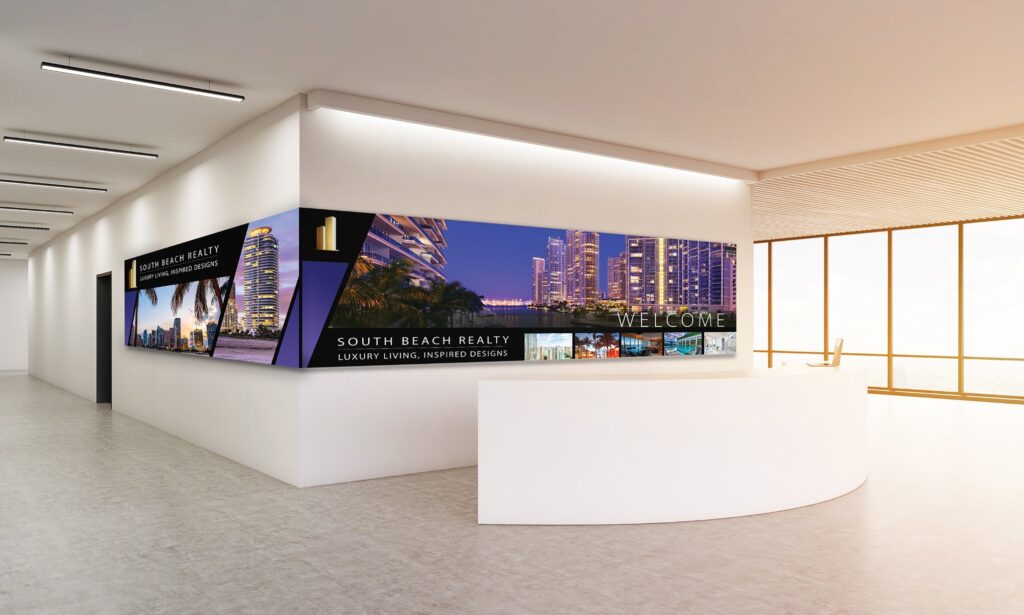
| Corporate Offices | P1.2–P1.9 | 800–1200 nits | Reception Feature Wall | Premium brand presentation |
| Control Rooms | P0.9–P1.5 | 600–800 nits | Large | Continuous 24×7 operation |
| Broadcast Studios | P0.9–P1.2 | 800–1000 nits | Studio Background | High refresh rate and color accuracy |
| Healthcare | P1.5–P2.5 | 700–1000 nits | Medium | Clear information display |
| Education | P2.0–P2.5 | 800–1000 nits | Auditorium Screens | Wide viewing angles |
| Hospitality | P1.5–P2.5 | 800–1200 nits | Lobby Displays | Premium guest experience |
| Airports | P2.5–P4.0 | 1200–1800 nits | Large Information Walls | High readability in bright spaces |
| Event Venues | P2.5–P4.0 | 1500–2500 nits | Large Stage Displays | Fast installation and portability |
| Government & Smart Cities | P2.5–P4.0 | 1000–1500 nits | Large | Reliability and long operational life |
An Active LED Video Wall is more than a display—it is a strategic business asset that improves communication, customer engagement, and operational efficiency.
Organizations across industries are adopting Active LED technology because it provides measurable advantages over traditional display systems.
Without visible bezels interrupting the content, an Active LED Video Wall creates an immersive visual experience that captures attention and enhances brand perception.
LED cabinets can be configured into virtually any size or aspect ratio, allowing businesses to create custom display solutions tailored to their available space and communication objectives.
Commercial-grade Active LED Video Walls are engineered for continuous operation, making them suitable for mission-critical environments such as control rooms, transportation hubs, and corporate command centers.
Modern LED systems integrate with advanced content management platforms, enabling centralized scheduling, remote updates, and real-time content control across multiple locations.
Unlike conventional displays that often require replacing entire panels, modular LED cabinets allow individual modules to be serviced or replaced. This reduces downtime and minimizes long-term maintenance costs.
Large-format, high-resolution visuals create memorable customer experiences, making Active LED Video Walls an effective medium for brand storytelling, product launches, corporate messaging, and digital advertising.
Many LED display projects exceed budget or fail to meet expectations because buyers focus on initial purchase price instead of long-term performance and lifecycle value.
A smaller pixel pitch increases cost but does not always improve the viewing experience. Match the pitch to the actual viewing distance and application.
Displays with lower refresh rates may appear acceptable in person but perform poorly on camera. This is particularly important for broadcast studios, conference spaces, and event venues.
The LED controller significantly influences image processing, synchronization, and future scalability. Ensure compatibility with your content sources and expansion plans.
Commercial environments require displays designed for extended operating hours, robust thermal management, and consistent performance.
Front-service or rear-service access should be planned during the design phase to simplify future maintenance and reduce downtime.
The lowest quotation may omit essential components such as structural engineering, calibration, installation, training, or after-sales support. Evaluate the complete solution—not just the hardware cost.
The total investment in an Active LED Video Wall extends far beyond the display hardware. Buyers should evaluate the complete project lifecycle, including installation, infrastructure, software, maintenance, and future scalability, to accurately assess the total cost of ownership (TCO).
One of the biggest misconceptions in the commercial AV industry is that the display itself represents the entire project cost. In reality, a successful LED video wall deployment involves multiple integrated components that work together to deliver reliable performance.
| Cost Component | Description |
| LED Display Cabinets | The primary hardware cost, influenced by pixel pitch, cabinet quality, LED brand, and display size. |
| Video Controller | Professional image processing, signal distribution, scaling, and color calibration. |
| Structural Framework | Wall mounting, steel fabrication, hanging structures, or custom architectural integration. |
| Power & Electrical Infrastructure | Dedicated power circuits, distribution systems, UPS (if required), and cable management. |
| Installation & Commissioning | Mechanical installation, alignment, calibration, testing, and user training. |
| Content Management Software (CMS) | Centralized content scheduling and remote display management. |
| Annual Maintenance Contract (AMC) | Preventive maintenance, inspections, calibration, and priority support. |
| Spare Parts & Future Expansion | Additional cabinets, receiving cards, power supplies, and replacement modules. |
Expert Recommendation: Always request a detailed Bill of Materials (BOM) from your supplier. It should clearly specify hardware, controller model, installation scope, warranty terms, and service commitments to avoid unexpected costs later.
A lower purchase price does not necessarily translate into a lower overall investment. Total Cost of Ownership considers the ongoing expenses associated with operating, maintaining, and expanding the LED video wall throughout its lifecycle.
When evaluating proposals, consider the following:
A slightly higher initial investment in premium commercial-grade hardware often results in lower maintenance costs, reduced downtime, and a longer operational lifespan.
An Active LED Video Wall should be evaluated as a business investment rather than a display purchase. The right solution can improve communication, customer engagement, operational efficiency, and brand perception, generating measurable long-term value.
Rather than asking, “How much does an Active LED Video Wall cost?”, organizations should ask:
“How much business value can a professionally designed Active LED Video Wall create over the next 5–10 years?”
Choosing the right supplier is as important as choosing the right technology. Asking the right questions helps ensure long-term performance, reliable support, and maximum return on investment.
✔ What pixel pitch is recommended for our viewing distance?
✔ Which LED brand and driver IC are used?
✔ What refresh rate does the display support?
✔ Is HDR supported?
✔ What is the brightness level?
✔ What grayscale performance does the display offer?
✔ How is color calibration performed?
✔ Is front-service or rear-service maintenance recommended?
✔ What structural support is required?
✔ Are ventilation requirements considered?
✔ What electrical infrastructure is needed?
✔ Will installation include calibration and testing?
✔ Which LED controller is supplied?
✔ Does the system support remote monitoring?
✔ Is a Content Management System (CMS) included?
✔ Can additional displays be added in the future?
✔ What is the warranty period?
✔ Are replacement modules stocked locally?
✔ What is the expected service response time?
✔ Is Annual Maintenance Contract (AMC) available?
✔ Are software updates included?
A reputable supplier should be able to answer each of these questions with confidence and provide supporting documentation.
“Many organizations compare Active LED Video Walls primarily on pixel pitch and price. However, the factors that most influence long-term performance are refresh rate, color calibration, controller architecture, cabinet precision, and after-sales service. These technical considerations determine image quality, reliability, and total lifecycle value far more than hardware specifications alone.”
— AV Solutions Engineering Team, Firstouch Solutions
The next generation of Active LED technology is focused on delivering higher image quality, improved energy efficiency, and smarter remote management while reducing maintenance complexity.
COB technology enhances durability, improves black levels, and offers better protection against dust, moisture, and accidental impact. It is increasingly preferred for premium indoor applications.
MIP combines the advantages of traditional SMD and MicroLED technologies, enabling finer pixel pitches with improved manufacturing efficiency.
Flip-chip technology reduces heat generation, improves energy efficiency, and extends the lifespan of LED displays.
Artificial intelligence is being integrated into LED controllers to automate color calibration, brightness adjustments, and predictive maintenance.
Future commercial LED ecosystems will increasingly support remote diagnostics, performance monitoring, firmware updates, and centralized management across multiple locations.
There is no universal “best” display technology. The right choice depends on viewing distance, content requirements, operating environment, and business objectives.
| If Your Requirement Is… | Recommended Solution |
| Premium seamless corporate display | Active LED Video Wall |
| Large retail feature wall | Active LED Video Wall |
| Mission-critical control room | Fine Pitch Active LED |
| Broadcast studio | Fine Pitch Active LED with high refresh rate |
| Temporary event staging | Modular Active LED Video Wall |
| Small meeting room with limited budget | LCD Display |
| High-end executive experience centre | Fine Pitch or COB LED |
| Outdoor advertising | High-Brightness Outdoor Active LED |
The most successful projects begin with understanding business goals—not just comparing technical specifications.
An Active LED Video Wall is a modular display system that uses active-matrix technology to individually control each LED pixel through dedicated driver circuits. This design delivers seamless visuals, high brightness, superior color accuracy, and reliable performance for commercial environments.
For large-format commercial applications, Active LED Video Walls generally provide better scalability, higher brightness, wider viewing angles, and bezel-free visuals. LCD video walls remain suitable for smaller installations where visible panel borders are acceptable.
The ideal pixel pitch depends on the viewing distance. Fine pixel pitches are recommended for close viewing environments such as boardrooms and broadcast studios, while larger pitches are more suitable for shopping malls, auditoriums, airports, and outdoor installations.
Yes. Commercial-grade Active LED Video Walls are designed for continuous operation and are widely used in command centres, airports, transportation hubs, retail environments, and corporate facilities.
With proper installation and regular maintenance, a commercial Active LED Video Wall can deliver reliable performance for many years. Actual lifespan depends on operating conditions, usage patterns, and component quality.
Pricing depends on factors such as pixel pitch, display size, LED quality, controller system, installation complexity, structural requirements, and maintenance services. Buyers should evaluate the total project cost rather than hardware alone.
Yes. Most commercial Active LED Video Walls feature modular cabinet designs that allow individual LED modules or components to be replaced without dismantling the complete display.
Routine maintenance includes cleaning, inspection, software updates, periodic color calibration, and preventive servicing to maintain consistent image quality and long-term reliability.
Retail, corporate offices, hospitality, healthcare, education, transportation, government, control rooms, broadcasting, and event venues all benefit from the scalability, brightness, and reliability of Active LED technology.
For organizations seeking impactful communication, premium customer experiences, and dependable long-term performance, an Active LED Video Wall offers strong value by combining durability, scalability, and operational efficiency.
An Active LED Video Wall is no longer just a display—it is a strategic communication platform that enables businesses to deliver immersive visual experiences, strengthen brand presence, and improve operational efficiency.
From seamless large-format installations in corporate headquarters to mission-critical control rooms and high-impact retail environments, Active LED technology has become the preferred choice for organizations that value image quality, reliability, and scalability.
However, selecting the right solution requires more than comparing prices or pixel pitches. Refresh rate, controller architecture, cabinet engineering, calibration, warranty, and after-sales support all play a crucial role in determining long-term success.
At Firstouch Solutions, we help businesses design, supply, install, and maintain commercial-grade Active LED Video Wall solutions tailored to their operational requirements and future growth plans. Whether you’re planning a premium corporate installation or a large-scale retail deployment, our team can help you identify the right technology, optimize your investment, and deliver a display solution built for long-term performance.
BACK TO BLOG
we are always happy to help in ways that we can.


