
Blog
Read what's happening in FirstouchKiosk | Keep update yourself about best digital signage solution & technology. Learn how digital signage / digital kiosk / digital notice board and digital standees can help in your business growth.
Read what's happening in FirstouchKiosk | Keep update yourself about best digital signage solution & technology. Learn how digital signage / digital kiosk / digital notice board and digital standees can help in your business growth.
 Touch Screen Kiosk |
  29th Jul 2025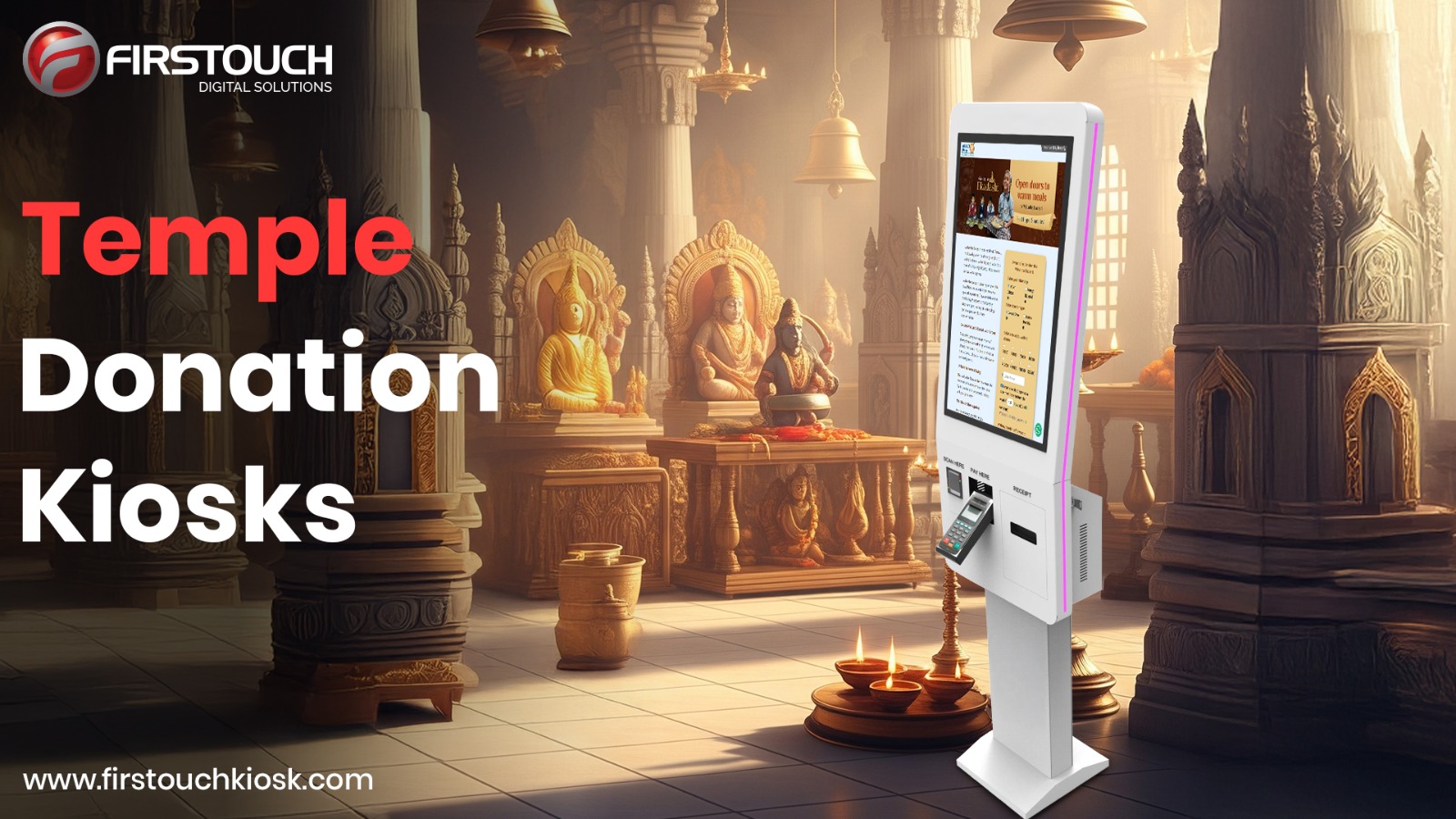
The idea of temples is rooted in deep spiritual and cultural significance in India. They are not just places of worship but also centers of tradition, community, and devotion. However, with the increasing number of devotees visiting temples across the country, the need for efficient and organized management has become crucial. This is where temple kiosks come into play.
These innovative self-service machines are revolutionizing the way temples manage crowds, services, and donations, making the entire process smoother and more efficient for both temple administrators and devotees.
A temple kiosk is a self-service interactive digital machine designed to assist devotees in various temple-related activities such as:
These kiosks are usually equipped with touch screens and user-friendly interfaces, allowing devotees to navigate through options easily.
They are strategically placed in temples to facilitate quick access to services, thereby reducing the need for manual intervention and long queues.
There are various types of kiosks used in temples depending on the services they offer. Here are the most common types
These kiosks allow devotees to:
This reduces the dependency on manual booking counters and ensures a smoother experience for the devotees.
Donation kiosks provide a digital platform for devotees to contribute to the temple. Features include:
These kiosks promote transparency and accountability in donation management.
These kiosks are designed to:
This system not only helps in crowd control but also ensures that the devotee’s temple experience is planned and organized.
Token kiosks are used to:
These kiosks are essential during peak seasons and festivals when the footfall is extremely high.
Temple kiosks come with several features that make them indispensable for modern temple management. These include:
Easy navigation and multilingual support ensure that people from different linguistic backgrounds can use the kiosk effortlessly.
From traditional cash payments to digital wallets and credit/debit cards, these kiosks support all forms of transactions.
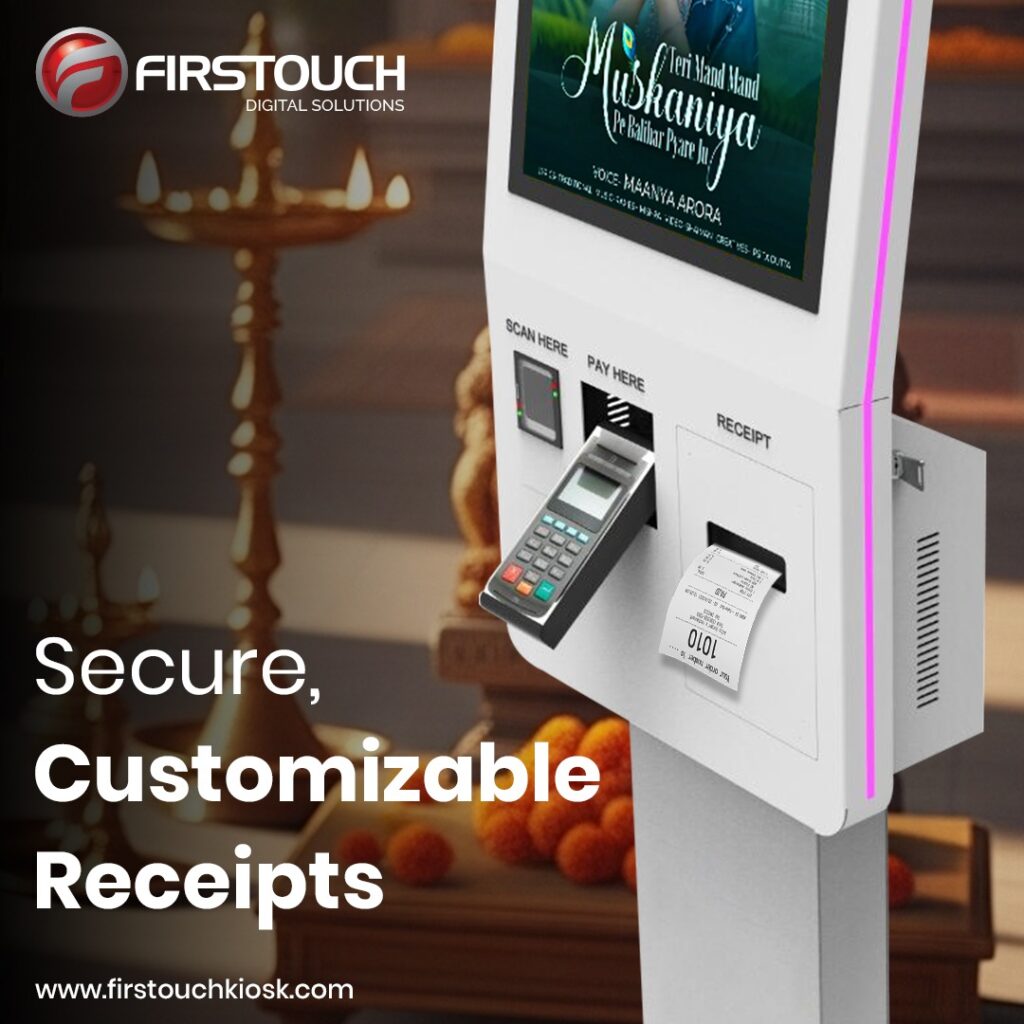
Devotees receive instant receipts for their puja bookings or donations, which can be used for tax benefits or personal records.
Kiosks can be customized to reflect the aesthetics and values of the temple, creating a seamless spiritual and technological experience.
This ensures that all data collected through kiosks is automatically updated in the temple’s central management system.
Temple kiosks bring several advantages to both temple authorities and devotees:
With the rise of smart cities and digital infrastructure, it is essential for temples to adopt modern technology to stay relevant and efficient. Here’s why going digital with temple kiosks is a smart move:
Temple kiosks are simple yet powerful machines. Here’s a typical flow of how they operate:
While temple kiosks offer numerous advantages, there are certain challenges to be aware of:
Setting up kiosks can be costly, especially for smaller temples. However, the long-term benefits often outweigh the initial costs.
Kiosks require regular maintenance to ensure smooth operation. Partnering with reliable service providers is essential.
Some devotees, especially elderly ones, may find it difficult to use digital kiosks. Providing on-ground support and simple instructions can help bridge the gap.
As kiosks handle sensitive information and financial transactions, ensuring data security is crucial.
To maximize their utility, temple kiosks should be strategically placed at:
Proper signage and assistance should be provided to guide devotees to these kiosks.
The future of temple kiosks looks promising. With the advancement of technology, we can expect:
As India progresses towards becoming a digital-first nation, temples too are embracing this transformation to better serve their communities.

At the iconic Statue of Equality in Hyderabad — one of the tallest seated statues of philosopher Ramanujacharya — the influx of devotees and tourists is massive. Managing such a footfall manually becomes a challenge, especially when it comes to puja booking, donation receipts, and visitor flow.
To address this, the temple authorities installed Firstouch Self-Service Kiosks. These kiosks now handle:
The result? Faster queues, increased transparency, and a highly improved devotee experience without additional manpower. Firstouch’s user-friendly UI ensures even elderly devotees can navigate it with ease. Temple staff have also praised its sturdy hardware, 24×7 support, and cloud-based reporting system for easier management.
Temple kiosks are not just machines—they are tools of empowerment, convenience, and modernization. By digitizing services like puja bookings, donations, and information access, these kiosks are transforming the way temples operate in India.
They bridge the gap between tradition and technology, allowing temples to maintain their spiritual essence while embracing the efficiencies of the digital age.
For temples looking to improve management, enhance devotee experience, and promote transparency, investing in temple kiosks is a step in the right direction.
Yes, most temple kiosks allow real-time puja booking. You can select the type of puja, preferred priest (if applicable), and available time slots right at the temple without needing to wait in long lines.
2. Is it possible to make a donation through the kiosk instead of the donation counter?
Absolutely. Temple kiosks are equipped to accept donations digitally through UPI, cards, or wallets. You’ll also receive a printed receipt instantly for transparency.
3. Will someone help me if I don’t know how to use the kiosk?
Yes. Most temples have volunteers or staff nearby to assist devotees—especially elderly people or first-time users—so you can get help anytime while using the kiosk.
4. Can I choose the exact time for my darshan or puja using the kiosk?
Yes. Kiosks show real-time availability and let you pick specific slots for darshan or puja, so you can plan your visit conveniently without crowd or delay.
5. Are the services at the kiosk available in my local language?
Yes. Most temple kiosks support multiple languages like Hindi, Tamil, Telugu, Kannada, Gujarati, and more. You can select your preferred language on the first screen.
6. Can I get prasad or temple gifts from the kiosk as well?
Many advanced kiosks include a vending or token-based system for buying prasad, flowers, or temple souvenirs. You can pay digitally and collect your items quickly.
7. What happens if the kiosk stops working while I’m using it?
If there’s a technical issue, the system automatically saves your partial transaction. You can either complete it later or seek help from temple staff. Backup counters are usually available during high-traffic hours.
8. Can I use the kiosk to pre-book pujas or darshan before I visit the temple?
Yes. Many temple kiosks are connected to mobile apps or websites, letting you pre-book rituals or time slots from home. You can then simply scan your code or enter your number at the kiosk to confirm
BACK TO BLOG
we are always happy to help in ways that we can.


